
Straddling Two Worlds
by Pastor David Langeland
The Maasai tribe is one of the most recognizable tribes on the African continent. Renowned for their vibrant attire and distinctive jewelry, they have remarkably preserved their cultural traditions despite sweeping societal transformations brought about by modern technology.
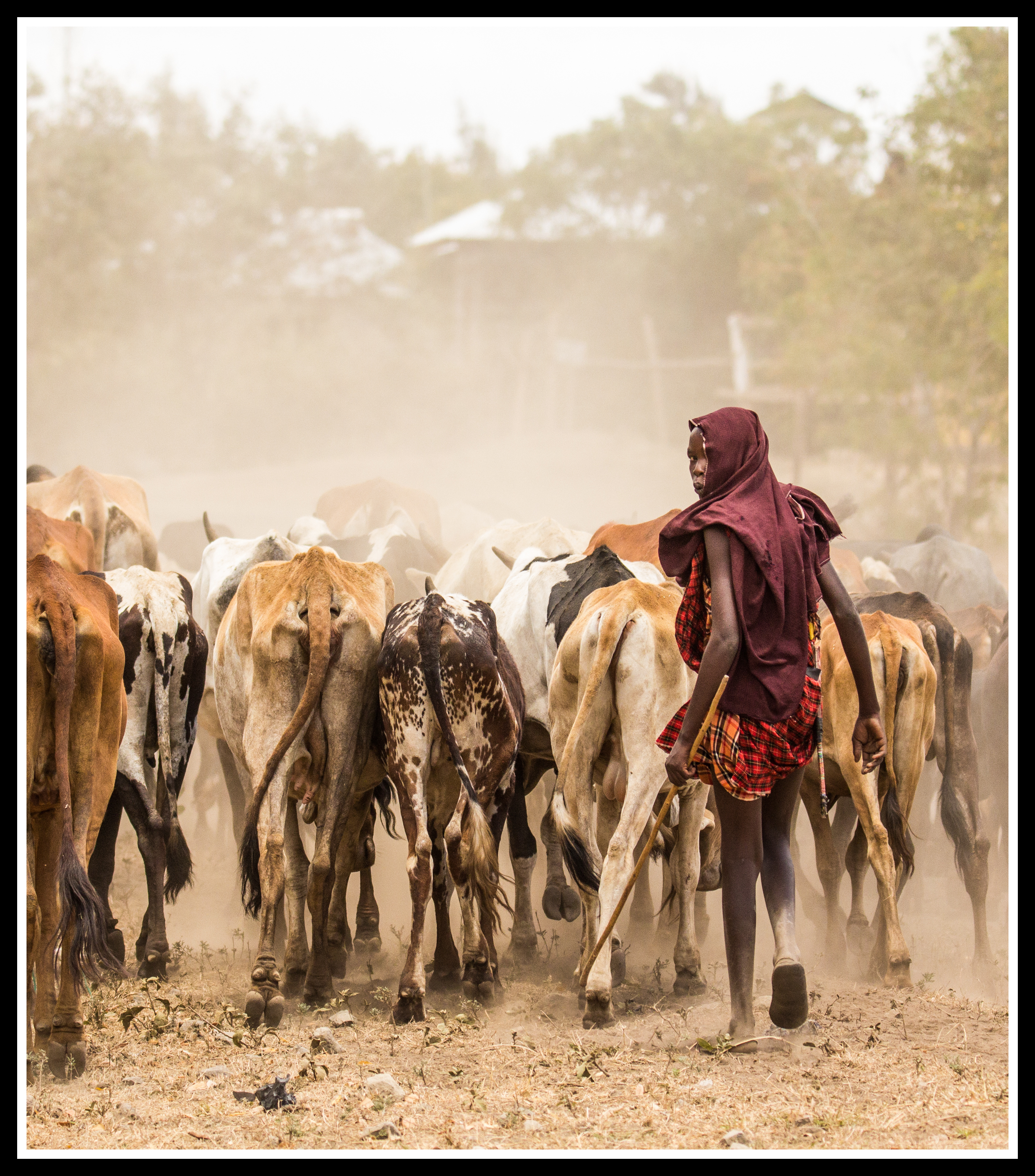 Maasai Young Man
Herding CattleResiding primarily in Northern Tanzania and Southern Kenya, recent population counts from 2024, estimate one million Maasai living in Tanzania and 1.2 million in Kenya.
A Maasai man's wealth is measured by how many cows, goats, and sheep he owns, which also affects his standing in the community. Boys learn to look after these animals and herd them from the age of six.
As pastoralists, the Maasai are semi-nomadic, moving when needed to find pasture for their flocks and herds. The women are tasked with building the Maasai homes from mud, sticks and cow dung. The finished huts are a marvel, with the cow dung adding a waterproof barrier to the walls which lasts for many years.
Despite the outward beauty and often romanticized lifestyle of the Maasai tribe and their lion-killing warriors, there exists many troubling aspects of the culture that negatively affect the lives of Maasai children.
Because of the high value placed on amassing cattle, traditionalists among the Maasai tribe hold little to no value for education. They have steadfastly resisted the government’s insistence that all Maasai children be sent to Primary school. Though compulsory school attendance by Maasai children was implemented by law in 1977 in Tanzania, only under threat of imprisonment have Maasai leaders complied with this requirement.
But their initial obedience to the new law was limited to allowing boys to attend school. Girls were considered “needed” at home. But in truth, Maasai men believed that girls had no need of education and feared that schooling would present a barrier to the traditional “child marriages” practiced in Maasai culture. This battle has continued for nearly fifty years.
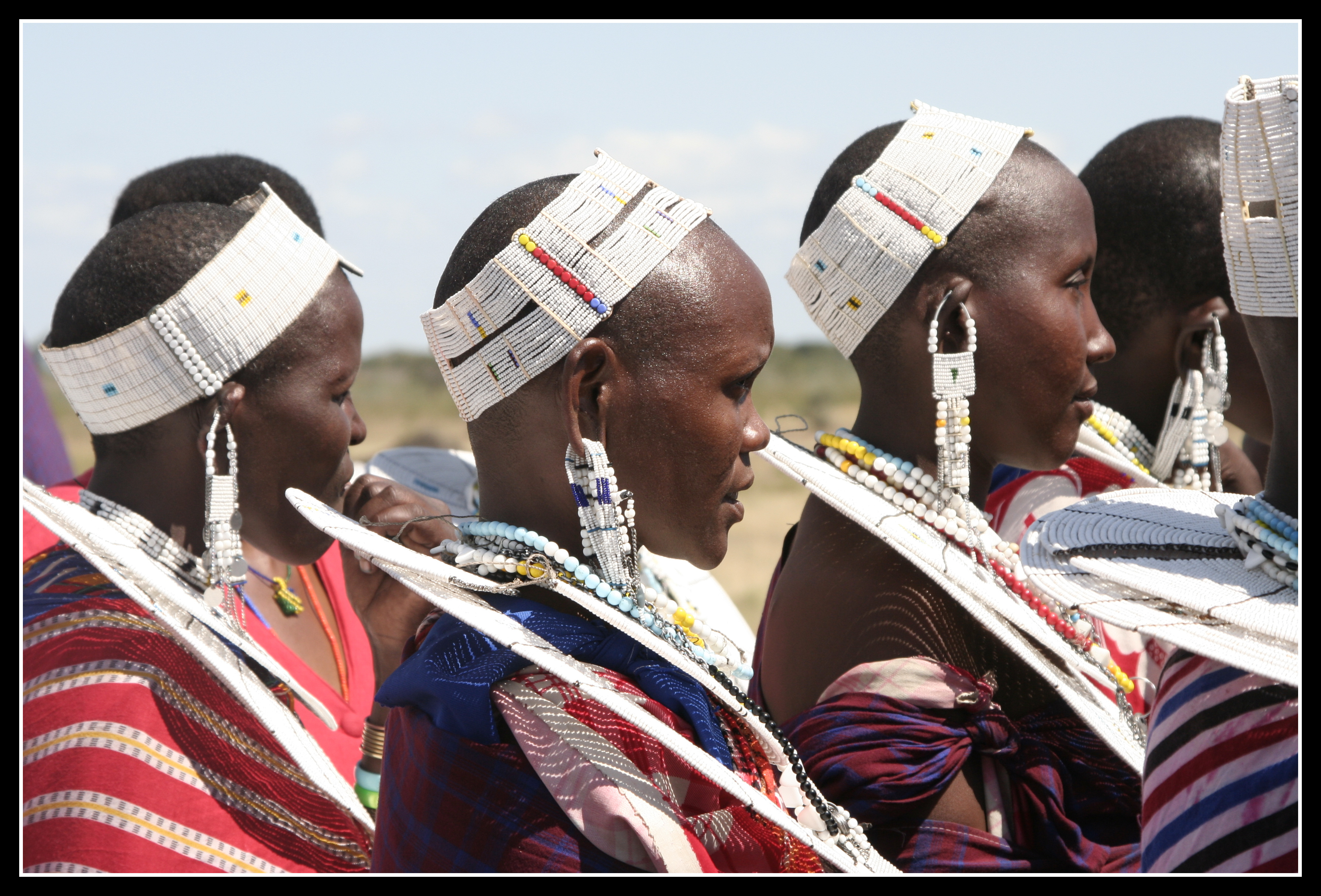 Young Maasai Women in
Esilalei Village, TanzaniaIn our current generation, it is much more common for Maasai girls to attend Primary School, which ends at 7th grade, but still rare for a Maasai girl to attend or graduate from Secondary School (High School). Most Maasai girls are given in marriage by the time they complete Primary School. Maasai men traditionally “sell” their daughters for an agreed bride price of cattle, to an older man with a degree of wealth that allows him to part with ten or twenty cows. Traditional Maasai tribalists take multiple wives, depending on their ability to afford the dowry for a second, third or fourth wife.
Those Maasai living closer to larger towns in Tanzania, have been exposed to lifestyles which are different from their traditional way of life. Many in the younger generation have come to realize that education is something to be desired and can offer them opportunities that their parents never experienced.
Yet there continues to be a struggle between the older generation that wants to preserve the long-revered traditions of the cattle-herding Maasai lifestyle, and their young men who desire to enter the modern world of education, work and business. In addition, there remains a staunch resistance in the Maasai community against young women being educated beyond the Primary School level. Many Maasai families continue the age-old practice of offering their daughters as potential brides in exchange for the traditional dowry of cattle to increase the family herd. This has remained a strong motivation for many Maasai tribalists to forbid their daughters from continuing their education.
Hidden with Christ Ministries has had a long friendship and working relationship with Maasai pastor Zablon. He has been a steadfast encourager to the younger generation of Maasai – both young men and young women – to pursue education. This has brought him into direct conflict with the traditionalists in the tribe who deeply resent his “interference” with the practices of the Maasai culture. He has repeatedly stood in the gap for Maasai girls who were being forced into unwanted marriages so that the family could gain cattle. He has contacted governmental authorities when young girls were forcibly taken from school and prepared for marriage against their will. It was this type of situation that brought our two female Maasai college students into the TOA KIDZ Education Project. You can read their stories in the following pages.
We have chosen to highlight our sponsored Maasai students in this issue of the Victory Magazine to illustrate the profound impact education sponsorship makes in the life of a student in Tanzania. As you read their stories let their achievements encourage you that our partnership with the Maasai community is making a profound and lasting difference in the future of each student and their families. Our direct connection to local Maasai leaders and families is a rare and unique opportunity that we do not take for granted.
Copyright © 2026 Hidden With Christ Ministries.
All rights reserved.